 | |
| Financial World 20 August 2013 |
Monday, August 19, 2013


Thursday, August 15, 2013
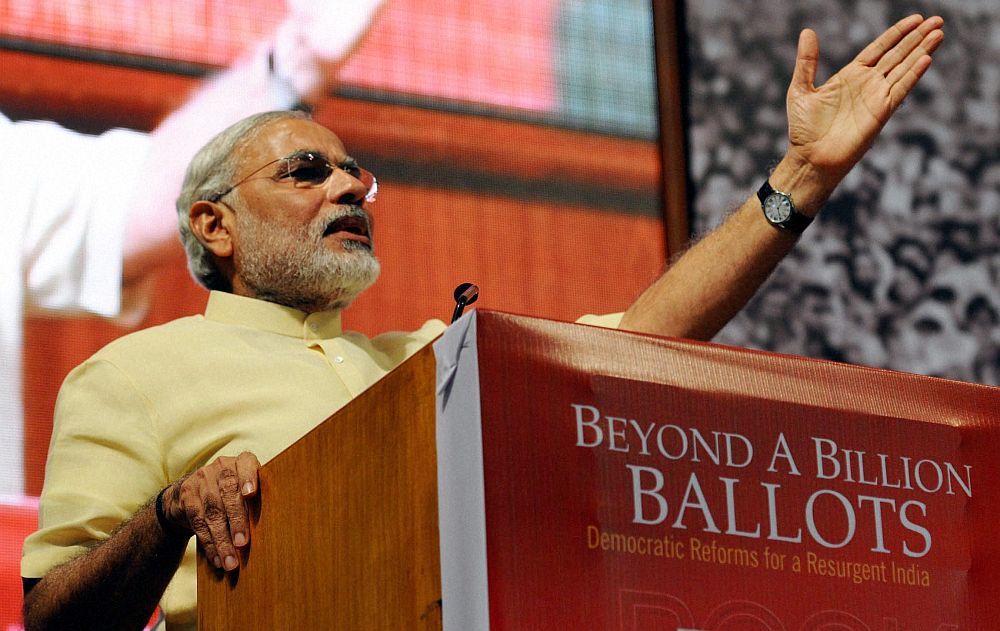
When I watch Namo speaking - - - - -
 |
| Courtesy - |
 | |||||||||
| Courtesy - http://underneaththestairwell.com/wp-content/uploads/2010/06/Gesch5.jpg |
 | |||
| Courtesy - http://newstrack.outlookindia.com/images/modi_speech20130627.jpg |
 | ||
| Courtesy - http://www.logoi.com/picture-movies/img/hitler_02.jpg |
 | |
| Courtesy - http://www.firstpost.com/wp-content/uploads/2013/02/Modi-Feb6-PTI1.jpg |
 | |
| Courtesy - http://www.english.illinois.edu/maps/ww2/waving.jpg |
 | |||
| Courtesy - http://timesofindia.indiatimes.com/thumb/msid-19815800,width-300,resizemode-4/Modi.jpg |
 | |
| Courtesy - http://library.thinkquest.org/10927/hitler.jpg |
Friday, August 2, 2013

Once bitten but not twice shy
Finally on the 23rd of June I
was able to get back to my
routine of going for a run in
the morning. So at 5 am I hit
the road at a slow trot. The humidity
in Delhi was oppressive and bore
down as a heavy weight on my
shoulders, but nothing could diminish
the joy of waking up to an early
morning run.
From my residence I passed the Saket Mall where I was greeted by a pack of dogs. Nothing usually happens, but that morning one of the dogs was as surprised as I to find my right leg in his jaws. He trotted away shaking his head in disbelief, I too stood there incredulous. The pain was inconsequential when compared to the shattered camaraderie that I felt for the canine species in general. I felt betrayed and I am not ashamed to say that I chased the animal not in an attempt to pursue the well written remedy of biting the dog in return but of getting closer so that the stone, which had found its way into my hand by then could reach its intended target.
I now realise that this relationship that I felt I had with these stray canines was no different from that of the many TV presenters on 'nature channels' believed they had while they man-handled animals in their attempts to de-mystify them for viewers many miles and time zones away.
I was treating the strays not only as kindred spirits but also as 4 legged anthromorphs. I had assumed that my predilection towards dogs combined with the strays living in close proximity with our species would result in better understanding if not appreciation of each other.
Unfortunately, I had forgotten that the main difference between a domesticated animal and a wild one is one of being able to curb one’s animal instincts. Domesticated animals are able to curb their animal instincts because of training. However, stray dogs are not domesticated. They are in fact wild animals living in a concrete jungle. They have adapted their ways to survive in a hostile environment. So instead of recognising the danger that they pose to us humans I had enveloped them in a warm blanket of concern, empathy and marvelled, like many others, at the canines ability to live off the land.
I had mistakenly fallen for the pithy 'proximity breeds familiarity', which even we humans avoid in some of our intra species interactions, to assume that my relationship with these animals was one of mutual bonhomie.
The fact that strays are not solitary but live in packs, something which their forest dwelling relatives do, indicates that they recognise the urban environment as wild. The only reason they do not hunt is because humans inadvertently feed them with the waste generated in daily life.
This waste also breeds a variety of other creatures everything from, flies and mosquitoes to rats and cockroaches, who we see as pests. So even while we try to exterminate them, our hearts bleed for the street dog, we feed them and we clothe them, we have no problem with them lolling around our hospitals and we go to untold lengths to avoid confrontation with them.
Why so?
The answer is easy and it goes beyond the philosophical and the treat all animals with respect trope. We have extended our feelings for the canines in our homes to the strays. We have gone to such an extent that we have even got court rulings to help the strays live safely.
There are rulings on where and how to feed the unlucky critters and even on how many meals a day should they be fed.
This is a double boon for these animals, first they feed off the waste generated by humans; next humans go out of their way and make 'home deliveries' to feed and protect the strays.
In the wild would sensible people brook any man-made interference to the lives of the animals there? There is a reason why zoo's and wild life areas have 'dont feed animals' signs. Its not only for the safety of humans and animals, its also recognition that man is not master of all he surveys and more importantly it is necessary for nature to take its course.
Should we adopt the same form of behaviour for dogs that live with us and dogs that live on the street? There is a difference between ensuring strays are not ill-treated and treating strays like kings. The former is akin to ensuring that peacocks are not hunted down or tigers are not poached while the latter is similar to feeding animals in the wild. We should do the former and not the latter
Most will not consider stray dogs to be vermin like other creatures living off the waste of the land. However, the way we show our concern for them is putting a spanner in the works of their interaction with the urban environment.
Spaying and vaccinating the dogs for rabies is touted as a way to solve the problem of strays. But one doesnt really know how well the programme of sterilisation and vaccination of the strays has been going on. For example in Delhi, in 2008, a MoU/agreement was signed between the Municipal Corporation of Delhi and the Animal Welfare Board of India for 'Humane Stray Dog Population Management', which included sterilisation and anti rabies vaccination for which a Society for Stray Canine Birth Control was jointly created by the MCD and AWBI. Its budget was met equally by both organisations.
This money was to be allocated to 10 NGOs working on Animal Birth Control. According to the agreement the NGO's were given a target of number of animals to be controlled per locality for which the NGO's would get a certain amount of money. However, in 2011 there was news that the MCD was going to set up its own sterilisation units.
Reports of a recent survey indicate that there has been an increase the number of dog bite cases in the city, 30608 dog bite cases in North Delhi alone in 2012-13 while in the previous year for the whole of Delhi it was 17634? One needs to make mention that there was no clear differentiation given between bites from strays and from domesticated canines.
When I went to Pandit Madan Mohan Malviya Hospital today (26th June), for the day three injection in the anti-rabies treatment series there were three others who had come for the same treatment, and I was in the 'injection room' for not more than five minutes. One can appreciate the preponderance of dog bites by the fact that rabies shots are kept filled in their syringes at the ready on the injection tray. This is of course unhygienic and may just reduce the efficacy of the dose.
While trying to get more information on this issue, I came across a website of an NGO dealing with strays. They say that they mark spayed and vaccinated strays by tattooing the inner thigh, they mention other NGOs brand or cut into the ear of these animals. Collars don't seem to be an option even though they are the best form of visual recognition and verification. I wonder if this is because putting a collar on a dog means that there is need for regular monitoring of its welfare (replacing collars etc) that would go beyond the mandate of the NGO, also it is cheaper to brand/tattoo/cut the dog, the issue of cruelty can be swept aside as the animal is under anaesthesia.
Stray dogs attacking and or biting humans is a form of man-animal conflict which needs some thought on how it should be dealt with. We need to come clean on what we want to do with the strays. Do we want to ensure that they are not ill-treated by other humans? Or do we want to make their life comfortable or in other words interfere with the natural process of living in an urban jungle? If it is the latter then there must be more responsibility than just feeding, providing warm clothes to these animals. It goes without saying that spaying and vaccination are programmes that have to continue.
I thought I was smart enough to recognise that the mongrel pup who entered home when I was 7 years and was baptised Snooty and who lived with us to the age of 15 is very different from her kith and kin that continued to live in the boondocks.
I made the mistake of not respecting the difference between the life in her adopted home and the life that she left behind. There were no territorial ambitions at home, there was no threat from other species or canines, food wasn't a cause of anxiety, further my father trained her, all this curbed her natural instincts. These very same instincts are needed in a jungle for a stray dog to survive. This is something we need to realise and then accordingly frame a programme that ensures both strays and humans can live together in peace.
Published in http://www.powerpolitics.in/Issues/August2013/page64.php
From my residence I passed the Saket Mall where I was greeted by a pack of dogs. Nothing usually happens, but that morning one of the dogs was as surprised as I to find my right leg in his jaws. He trotted away shaking his head in disbelief, I too stood there incredulous. The pain was inconsequential when compared to the shattered camaraderie that I felt for the canine species in general. I felt betrayed and I am not ashamed to say that I chased the animal not in an attempt to pursue the well written remedy of biting the dog in return but of getting closer so that the stone, which had found its way into my hand by then could reach its intended target.
I now realise that this relationship that I felt I had with these stray canines was no different from that of the many TV presenters on 'nature channels' believed they had while they man-handled animals in their attempts to de-mystify them for viewers many miles and time zones away.
I was treating the strays not only as kindred spirits but also as 4 legged anthromorphs. I had assumed that my predilection towards dogs combined with the strays living in close proximity with our species would result in better understanding if not appreciation of each other.
Unfortunately, I had forgotten that the main difference between a domesticated animal and a wild one is one of being able to curb one’s animal instincts. Domesticated animals are able to curb their animal instincts because of training. However, stray dogs are not domesticated. They are in fact wild animals living in a concrete jungle. They have adapted their ways to survive in a hostile environment. So instead of recognising the danger that they pose to us humans I had enveloped them in a warm blanket of concern, empathy and marvelled, like many others, at the canines ability to live off the land.
I had mistakenly fallen for the pithy 'proximity breeds familiarity', which even we humans avoid in some of our intra species interactions, to assume that my relationship with these animals was one of mutual bonhomie.
The fact that strays are not solitary but live in packs, something which their forest dwelling relatives do, indicates that they recognise the urban environment as wild. The only reason they do not hunt is because humans inadvertently feed them with the waste generated in daily life.
This waste also breeds a variety of other creatures everything from, flies and mosquitoes to rats and cockroaches, who we see as pests. So even while we try to exterminate them, our hearts bleed for the street dog, we feed them and we clothe them, we have no problem with them lolling around our hospitals and we go to untold lengths to avoid confrontation with them.
Why so?
The answer is easy and it goes beyond the philosophical and the treat all animals with respect trope. We have extended our feelings for the canines in our homes to the strays. We have gone to such an extent that we have even got court rulings to help the strays live safely.
There are rulings on where and how to feed the unlucky critters and even on how many meals a day should they be fed.
This is a double boon for these animals, first they feed off the waste generated by humans; next humans go out of their way and make 'home deliveries' to feed and protect the strays.
In the wild would sensible people brook any man-made interference to the lives of the animals there? There is a reason why zoo's and wild life areas have 'dont feed animals' signs. Its not only for the safety of humans and animals, its also recognition that man is not master of all he surveys and more importantly it is necessary for nature to take its course.
Should we adopt the same form of behaviour for dogs that live with us and dogs that live on the street? There is a difference between ensuring strays are not ill-treated and treating strays like kings. The former is akin to ensuring that peacocks are not hunted down or tigers are not poached while the latter is similar to feeding animals in the wild. We should do the former and not the latter
Most will not consider stray dogs to be vermin like other creatures living off the waste of the land. However, the way we show our concern for them is putting a spanner in the works of their interaction with the urban environment.
Spaying and vaccinating the dogs for rabies is touted as a way to solve the problem of strays. But one doesnt really know how well the programme of sterilisation and vaccination of the strays has been going on. For example in Delhi, in 2008, a MoU/agreement was signed between the Municipal Corporation of Delhi and the Animal Welfare Board of India for 'Humane Stray Dog Population Management', which included sterilisation and anti rabies vaccination for which a Society for Stray Canine Birth Control was jointly created by the MCD and AWBI. Its budget was met equally by both organisations.
This money was to be allocated to 10 NGOs working on Animal Birth Control. According to the agreement the NGO's were given a target of number of animals to be controlled per locality for which the NGO's would get a certain amount of money. However, in 2011 there was news that the MCD was going to set up its own sterilisation units.
Reports of a recent survey indicate that there has been an increase the number of dog bite cases in the city, 30608 dog bite cases in North Delhi alone in 2012-13 while in the previous year for the whole of Delhi it was 17634? One needs to make mention that there was no clear differentiation given between bites from strays and from domesticated canines.
When I went to Pandit Madan Mohan Malviya Hospital today (26th June), for the day three injection in the anti-rabies treatment series there were three others who had come for the same treatment, and I was in the 'injection room' for not more than five minutes. One can appreciate the preponderance of dog bites by the fact that rabies shots are kept filled in their syringes at the ready on the injection tray. This is of course unhygienic and may just reduce the efficacy of the dose.
While trying to get more information on this issue, I came across a website of an NGO dealing with strays. They say that they mark spayed and vaccinated strays by tattooing the inner thigh, they mention other NGOs brand or cut into the ear of these animals. Collars don't seem to be an option even though they are the best form of visual recognition and verification. I wonder if this is because putting a collar on a dog means that there is need for regular monitoring of its welfare (replacing collars etc) that would go beyond the mandate of the NGO, also it is cheaper to brand/tattoo/cut the dog, the issue of cruelty can be swept aside as the animal is under anaesthesia.
Stray dogs attacking and or biting humans is a form of man-animal conflict which needs some thought on how it should be dealt with. We need to come clean on what we want to do with the strays. Do we want to ensure that they are not ill-treated by other humans? Or do we want to make their life comfortable or in other words interfere with the natural process of living in an urban jungle? If it is the latter then there must be more responsibility than just feeding, providing warm clothes to these animals. It goes without saying that spaying and vaccination are programmes that have to continue.
I thought I was smart enough to recognise that the mongrel pup who entered home when I was 7 years and was baptised Snooty and who lived with us to the age of 15 is very different from her kith and kin that continued to live in the boondocks.
I made the mistake of not respecting the difference between the life in her adopted home and the life that she left behind. There were no territorial ambitions at home, there was no threat from other species or canines, food wasn't a cause of anxiety, further my father trained her, all this curbed her natural instincts. These very same instincts are needed in a jungle for a stray dog to survive. This is something we need to realise and then accordingly frame a programme that ensures both strays and humans can live together in peace.
Published in http://www.powerpolitics.in/Issues/August2013/page64.php
Saturday, July 13, 2013
Another one bites the dust!
Even as there is another
Dodo in the making, one realises that technology becoming redundant is a prime example
of the human's god like abilities – innovating, creating and then finally
disposing.
I went to the CTO on Saturday to bear witness to another technology getting off our life support system. I wasn't alone, there were many like me. Most had never been inside before nor had they ever received what it spewed out. Some journalists from radio, print and TV had come to record this farewell, they captured faces and quotes and another moment of history that would soon be forgotten.
The crowd was young, you
could have counted the grey hair in the hall on your fingers. The
one grey spot among them reminisced, to anybody interested, how this
technology had connived with others and got him married, sent him to the eastern front in the
1971 war and seemed to have served as milestones in his life.
The other side of the counter was a different matter. There was grey everywhere and it was noticed. The young who had come to bask in the glow of something that was being propelled into the black hole of history saw those with the grey in the same light as the technology that was operated by them.
They both were irrelevant, their soon to be obsoleteness made all the more apparent by this sudden and short burst of interest.
Terms like VRS, inept, unnecessary, waste of government money, were mouthed not as foul language but as hard
reality of the young world they seemed to inhabit. These were of the
generation that understood that bits and bytes and 0s and 1's made a
language, they had never experienced the world of dots and dashes.
They all clutched more than one telegram form sending messages to
friends and family with things like 'congratulations this is your first and last
telegram'.
Through the dark humour of reality it did not come to them that the grey that
they see today was jet black once. That both the human and the technology operated 24x7 sending and receiving messages that not only brought the world closer but also changed it.
This technology did keep up with the times. The 0s and 1s of the computer age replaced the dots and dashes, the key board replaced the Morse Code Machine, and so the telegram found a little corner of relevance in the world.
But today in India where more people have access to a cell phone than a toilet the relevance of the telegram has finally come to an end.
Soon people will forget that CTO meant Central Telegraph Office, it could come to mean Check This Out or Click To Operate, and by then another queue would form to catch a glimmer of another fading star.
 |
| Web Based Telegraph Service |
 |
| The queue at CTO |
 |
| CTO Janpath New Delhi |
 |
| The Old and the New |
 |
| Telegram Messages |
 |
| Inside the counter |
Saturday, April 6, 2013
Justice Katju's idea - a much needed immunisation for the media
A
few days
ago I
watched the
movie Fair
Game. Its
based on
real life
incidents leading
to the
2nd
Iraq war
and its fall
out on
an American
family. Everyone
knows the
story – the
Bush junior
government leaked
the name
of a
CIA operative
to newspapers,
endangering her
life and
those of
her children
and husband.
This was
because her
husband –
Joseph Wilson,
a former
diplomat and Ambassador
to Niger,
stated that
American claims
of yellow
cake being
exported to
Iraq for
their nuclear
programme was
completely false.
He made
that statement
because the
American
government had
sent him
to determine
whether these
claims, initially
made by
the British,
were actually
true. Ambassador
Wilson went
to Niger
and found
that these
claims were
baseless.
While
working in
the CIA
Valerie Plame,
the Ambassador's
wife, had
successfully argued that a
waylaid shipment
of Aluminium
Tubes enroute
to Iraq
were not meant
for the
Iraqi nuclear
weapon programme.
This punctured the claims of Dick Cheney and Condellizza Rice who
were hell bent on believing that these tubes were heading for
centrifuges in Iraq's non existent nuclear facility. Valerie's
report gave these
war hungry
officials less
fodder to
feed their
cannon, aimed at
Iraq, with.
However, that
did not
stop Bush
and his
cohorts,
including those
from across
the pond
in the
UK, from
publicly using
these false
arguments to
attack Iraq
eventually.
Bush
and Blair
never found
any weapons
of mass
destruction –
but they
did destroy
a country
and a
people.
This
would not
have been
possible if
the media
had not
been cheer-leading the warmongers,
lead by
Bush and
his merry
men including
Blair, into
war.
The
media whose
role was
to be
unbiased and
extract the
truth failed
miserably in
their duty
to report
the truth
and question
their government
in the
lead up
to the
2nd
Iraq war.
This was
a result
of human
frailty, US
was coming
out of
the 9/11
attacks for
which the
Bush government
had also
blamed Saddam,
without proof.
So everyone
wanted to
ride the
'wave' in
every possible
way.
Thus,
for the
media to
go against
the prevailing
hysteria in the
country would
have been
nigh impossible
because many in
the media too
were affected
by the
9/11 events.
More importantly
if that was
the mood
that was
selling at
that time
it would
have been
suicidal to
have gone
against the
tide.
So,
the the
media toed
the official
line and
then went
to battle
with the
troops in
an arrangement
termed as
'embedding' where
reporters would
tag along
with troops
to the frontline
on the condition
that their reports would be vetted by the military.
Thus to
sell their
newspaper and
news channels,
media outlets
sold the
war to
readers back
home.
Would
it be
wrong to
say that
in its
desire for
breaking news
and exclusivity,
the media
sold itself
down the
river? Did
it lead
to the
current situation
we have
in Iraq
and even
Afghanistan?
It
is not
that this
has happened
only in
the West,
we have
had our
Iraqi moments
too. Who
can forget
the 'live
reporting' during
the 26/11
which though
farcical at times
was enough to update Pakistani handlers who could then help their
terrorists thereby endangering
the lives
of Mumbaikars
and soldiers.
Who can
forget the
Nira Radia
tapes and
kingmaking role
that certain
media personnel
were playing
a few
years back.
An immediate
fall out
of that
was Vinod
Mehta was
no longer
seen on
NDTV as
a commentator.
So
its a
bit unfortunate
when people
of the
media say
that for
journalists “The
best training
is on
the field.”
The only
response to
that is
- our society,
readers and
news viewers
cannot be
used as
guinea pigs
or held
hostage as
journalists gain
experience and
hone their
skills in
the field.
Which
therefore brings
us to
Justice Katju's
suggestion about
minimum
qualifications
required to
be a
journalist.
That
meetings in
the news
room go
just beyond
news to
TRP, marketing
and revenues
is no
longer fiction
– the case
going on
between Zee
News and
JSPL and
the Caravan
article about
TimesNow point
to it.
Advertorials are
now passé,
news reports
in papers
are regurgitated
directly from
corporate
newsletters. So
the need
for a
little more
professionalism
in the
media is
not something
that is
coming out
as a
bolt-from-the-blue.
The
argument about
such a
move curtailing
freedom of
press, decreasing
opportunities for
potential
journalists and
ignoring the
special role
that journalism
plays in
society is
fallacious. It
would seem
that those
arguing against
the Katju
idea of
minimum
qualification
think of
it as
a 'pedigree'.
This is
unfortunate, a
minimum
eligibility has
to be
seen as
a 'immunisation'
against the
potential
hazards a
journalist will
face which
could either
make him
an inadvertent
transmitter of
news, or
lead him
to act
or commit acts,
that goes
against
journalistic
ethics, at
the very
least.
The
point that
can be
argued is
what kind
of minimum
qualification
would be
required? Would
that
qualification be
an outcome
of an
educational
course? Or
could that
qualification be
tested and
be reflected
in a
potential
journalist's
communication skills,
knowledge of
a variety
of topics,
understanding of
the ethics
and
responsibilities
of this
profession?
The
fact that
there are
no qualifications
for entry
into journalism
puts the
responsibility on
the line
managers to
mentor these
young reporters.
Besides
mentoring, the
question of
taking onus
for the
errors made
by novice
journalists also
raises its
awkward head.
More importantly
these trainee
journalists may
not have
a benchmark,
especially of
the do's
and dont's,
that they
can compare
with and
thus can
easily be
swept into
the flood
of unacknowledged
perks that
come along
with this
profession that
also wields a
lot of
power. Basic
qualifications
can provide
future
journalists with
certain markers
that can
guide them
in their
profession. That
is not
to say
that those
with such
qualifications
wont be
fallible,
pedigreed hacks
with higher
qualifications
have been
found wanting
in more
than one
occasion.
If
highly qualified
and experienced
media
professionals can
falter leading
to grave
repercussions for
society, one
can only
imagine the
threats from
those learning
on the
job and
the consequences
it has
on our
society. The
need is
to create
and foster
inbuilt
mechanisms that
allow journalists
to gauge
professional and
moral grey
areas so
that their
choices reflect
the needs
of society
– which is
what journalism
is about.
I am
not a mind
reader but
it would
seem that
this is
what Justice
Katju is
aiming for
and this
can't be
a bad
idea.
Friday, January 25, 2013
The strange case of the cold, demand for justice and cricket
My
train to
Delhi was
delayed by
eleven hours.
I had
checked the
status of
the train
on the
web where
it did
say that
the train
had been
delayed, but
for some
reason the
tele-service
mechanically
proclaimed that
the train
was on
time. This
was a
very real
dilemma of
who to
believe and
the kind
of loss
that would
result from
choosing one
from the
other. Finally
I did
go to
the station
with my
luggage and
lunch, and
came back
to have
that lunch
at the
dining table.
This gave
me an
opportunity to
watch,later that
evening, Sunil
Gavaskar and
Imran Khan
- former
captains of
their national
cricket teams
- discuss
that day's
one-day-cricket
match in
Eden Gardens
which India
lost.
Sunil
Gavaskar made
some pertinent
observations
about the
Indian cricket
team. He
said that
the IPL
is destroying
cricket in
general, which
Imran Khan
agreed to.
Indian cricketers
are choosing
self before
the nation
in opting to
play for
the IPL.
He explained
that test
cricket was
the foundation
for all
forms of
cricket and
a cricketer
who did
well in
test cricket
would do
well in
the shorter
forms of
the game
but this
was not
true in
the reverse
case.
Test
cricket is
a long
dawn out
affair; some of
the qualities that a test cricketer builds from this game and needs
to excel in this game are temperament,
skill,
perseverance, patience.
I am
sure he
would agree
that the
game also
needs the
players to
build and
have stamina,
concentration,
unflagging team
spirit and
self motivation
besides other
things which
a non-sportsman
like me
may not
be aware
of. What
Sunil Gavaskar
was indicating
is that
test cricket
is the
foundry which
toughens the
cricketers,
enabling them
to deal
with other
forms of
the game.
By cricketers
and cricket
management
choosing to
opt for
the shorter
and more
lucrative forms
of the
game these
sportsmen and
administrators
are building
a team
which is
hollow in
every aspect
of the
game as
they havent
gone through
the winepress
that builds
and hones
the skills
and qualities
of a
good cricketer.
This
philosophy as
explained by
Sunil Gavaskar
can also
be used
in dealing
with the
current social
problems facing
our country.
Take for
example the
case of
the outcry
for justice
for rape
victims post
the brutal
gangrape of
a young
women in
a moving
bus on
the 16th
of December
and her
subsequent death.
After the
youth took
to the
streets with
their demands
for justice,
stricter
punishment which
ranged from
chemical
castration to
hanging others
– from
politicians to
film stars
followed suit.
Jaya Bachan
shed tears
and the
lawyers of
Delhi declared
that they
would not
represent the
accused.
These
demands and
gestures are
all forms
of the
IPL mindset
that beset
Indian cricket
which have
now come
to roost
within our
society. Why
do you
think rape
cases take
so long
in court?
One reason
is that
lawyers
themselves ask
the court
for adjournments.
Lawyers in
our country
think of
the legal
process not
as a
way to
get justice
but as
a method
to ensure
that the
case does
not come
to trial
and thereby
allowing the
accused to
continue living
within society.
What
exactly was
Jaya Bachan
shedding tears
about? The
way women
are treated
in tinsel
town – ala
casting couch
or the
manner of
their depiction
in movies
through vulgar
item songs,
lurid lyrics
and scripts
and the
clothes worn?
Why
is there
a hue
and cry
by society
and youth
about police
and government
insensitivity?
Dont these
very people
complain when
they are
stopped for
minor
misdemeanour’s?
Dont they
jump the
line on
occasion by
asking for
favours from
powerful
contacts? Why
do they
try to
bribe their
way through
police sanction
when they
are caught
transgressing –
traffic rules
for example?
How do
they tolerate
young children
working in
homes of
their own
families or
in families
of their
peers?
It
is easy
to paint
ourselves out
of a
picture and
put the
blame on
others. What
is happening
today to
women is
not something
new. We
need to
ask some
basic questions
- why
do mothers,
and inlaws
try to
kill her
as a
foetus, why
is she
not allowed
into religious
places? And where
are we in this picture? Rape
is another
form of
brutality that
the female
sex has
to endure
in Indian
society.
The
point is
that this
is another
instance of
missing the
forest for
the trees.
These demands
are for
quick solutions
that do
not question
the systemic
problems faced
by women
and our
role in
perpetuating them
and our
responsibility of
preventing them.
This
is much
like another
debate that
is doing
the rounds
of some
news channels
– that of
the cold
and homeless.
TV channels
display shock
and anger
as poor
outstation
patients live
on the
streets of
Delhi in
the biting
cold as
they wait
for appointments
at India's
best and
largest hospital.
The basic
question that
they repeatedly
ask is
why isnt
the government
and the
hospital
constructing more
shelters? Another
pointless
question which
is trumpeted
is 'isnt
the government
shocked'? These
half-baked
questions do
not resolve
the problem
and only
depict the
channel as
being concerned.
The
point is
why do
patients have
to come
to Delhi
to be
treated? Why
are private
hospitals not
following the
court's orders
to provide
beds and
treat the
poor? It
is not
enough to
ask the
government what
they are
doing, one
should also
question why
government plans
and schemes
and court
orders are
not followed.
It
is not
enough to
demand stronger
laws and
harsher
punishments to
stop rapes,
nor will
problems of
the sick
coming for
treatment be
solved by
building
shelters. What
Sunil Gavaskar
said about
cricket has
a lot
of substance
in the
current issues
faced by
our society.
We need
to build
a temperament
that respects
laws and
each other.
We as
individuals and
society need
the skill
and patience
to prevent
crimes from
occurring and
we need
the perseverance
to use
our institutions
in a
manner that
makes them
work and
deliver.
Seeking
quick fix
solutions will
not solve
the problem
as they
do not
question our
role in
perpetuating a
problem and
our
responsibility in
fixing it.
It is
not without
reason that
'be the
change you
want to
see' and
'Ask
not
what
your
country
can
do
for
you
-
ask
what
you
can
do
for
your
country'
were words
spoken by
two people
who are
beacons for
freedom and
democracy.
Subscribe to:
Posts (Atom)